
Polyimide Gold Finger Tape at 260°C for 30 Minutes: Clean Removal After Plating and Paint Masking
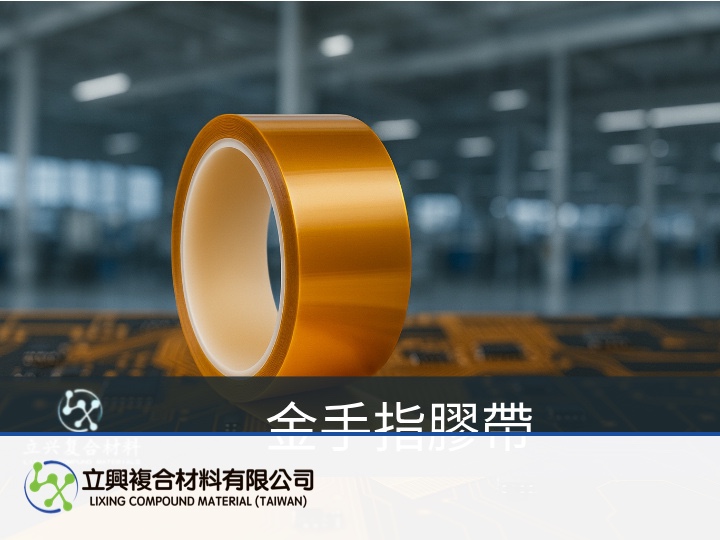
Polyimide gold finger tape YD-08-YL is rated 260°C for 30 minutes without deforming, with a 0.065 mm total thickness, 8 kV withstand voltage and peel force of at least 100 g/5mm. For PCB plating, paint masking and high-temperature baking, that means the masked area stays covered through the hot stage and the tape peels off cleanly afterwards, so you spend less time removing residue. Compare these figures with your own process temperature and dwell time before ordering, and check the full data and test methods on the polyimide gold finger tape specification page.
Holds Shape at 260°C for 30 Minutes, So Mask Edges Stay Put
A common problem in paint baking is tape that shrinks or lifts in the oven, letting paint creep into the area it was meant to protect. YD-08-YL uses a high-performance polyimide film backing. The product data sheet lists heat resistance of 260°C / 30 min, tested on 304 mirror steel plate, and states the tape does not deform under this condition. Mask edges that stay in place help keep the coating boundary intact.
Clean Removal After the Oven Saves Cleanup Time
Adhesives that degrade at high temperature tend to leave residue, which adds manual wiping downstream. This tape pairs the film with a high-temperature silicone pressure-sensitive adhesive, and the product page states it can be peeled while hot with no adhesive residue, leaving a smooth, flat surface. Real PCB surfaces differ from 304 mirror steel, so trial the tape on a representative board at your process temperature before production.
A 0.065 mm Thin Build for Precision Electronics Masking
Total thickness is 0.065 ± 0.005 mm, with a polyimide backing of 0.025 ± 0.0005 mm (GB/T 7125-1990). The product page positions it for precision electronics manufacturing, and a thin, flat masking layer suits the contact areas that need protection.
Masking That Stands Up to Plating Chemicals and Solvents
Plating and paint masking bring acids, alkalis and solvents along with heat. The product page states the tape resists acids, alkalis, solvents and chemical agents, making it suitable for plating and paint-masking processes. For electrical performance it lists withstand voltage of at least 8 kV (GB/T 8554-1993) and surface resistivity of at least 10^13 Ω (ASTM D4496).
Resists Breaking During Automated Application and Rewinding
Tensile strength is at least 40 MPa (GB/T 7753-1987) with elongation at break of at least 50%, and the product page notes the tape does not break easily during application or rewinding. Stable inner and outer layer peel force of at least 100 g/5mm (GB/T 2792-1998) keeps adhesion consistent along the roll in automated lamination.
Where It Fits in High-Temperature Processes
- Plating masking during PCB processing, covering areas that must stay unplated
- Local protection during high-temperature painting and baked-finish coating
- Securing electronic components through high-temperature steps
Why Heat Resistance Is Stated as Temperature and Time
Heat aging of the adhesive and film is a thermally activated chemical change, and engineers commonly use the Arrhenius equation to describe how temperature affects reaction rate.
k = A × exp(-Ea / (R × T))
- k: reaction rate constant, units depend on reaction order
- A: frequency factor, same units as k
- Ea: activation energy, J/mol
- R: ideal gas constant, 8.314 J/(mol·K)
- T: absolute temperature, K (260°C is about 533 K)
Because temperature sits inside the exponential term, the degradation rate climbs exponentially as process temperature rises, and a longer dwell lets more change accumulate. That is why the product data pairs 260°C with 30 minutes. The equation applies to a single dominant thermally activated reaction with a roughly constant activation energy and supports relative comparison only. Ea and A for this product are not published, so it cannot be used to calculate service life or to extrapolate to higher temperatures or longer times; sample validation remains the basis for decisions. Source: OpenStax Chemistry 2e, 12.5 Collision Theory.
What to Share When Requesting Samples
Send us your peak process temperature and dwell time, plus the substrate and the chemicals the tape will contact. We will help check whether YD-08-YL fits and arrange samples for a trial under your actual conditions.
One Less Cleaning Step in High-Temperature Masking
If you need masking that handles 260°C for 30 minutes and peels off without residue, see the full specifications on the YD-08-YL polyimide gold finger tape product page, or email yw@zh-lx.com to request samples or a specification consultation.
#PolyimideTape #GoldFingerTape #HighTemperatureTape #PCBMasking #PaintMasking