
PTFE Film Tape Chemical Resistance: Keep Acids and Solvents on a Replaceable Film
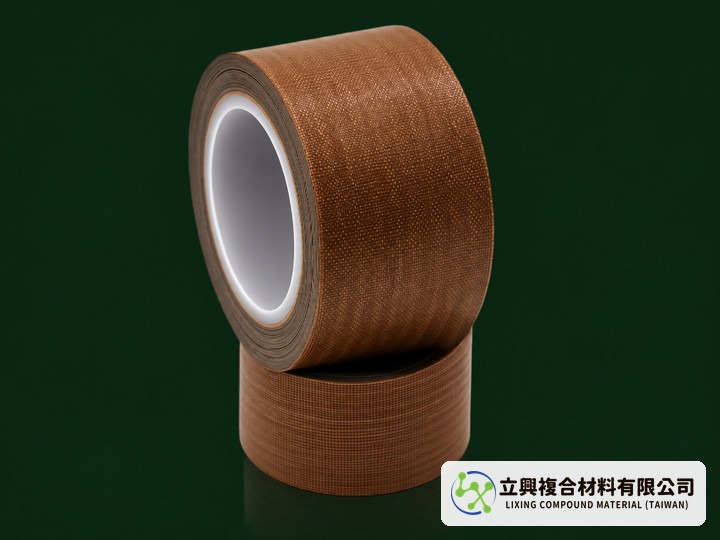
When a roller or heat-sealing surface meets acids, alkalis or cleaning solvents, a layer of PTFE film tape puts the PTFE face in contact with the chemical instead of the equipment, and a worn strip simply peels off for replacement. The product page for Lixing PTFE film tape lists resistance to strong acids, alkalis and chemical solvents, a 0.15 mm total thickness and a 260°C maximum temperature. Before ordering, confirm three things: the chemical and its concentration, the working temperature, and whether the tape edge will sit in liquid.
Where chemical resistance pays off
Acids, alkalis and solvents stay on the film
A corroded roller or sealing jaw means downtime for rework or replacement. A replaceable film in front of the metal adds a barrier between the chemical and the equipment. The product page describes the PTFE film as chemically inert and resistant to corrosion from strong acids, alkalis and chemical solvents.
Less residue, faster cleaning
Little sticks to the film, so cleaning takes less effort. The product page states that the smooth, non-stick surface keeps melted packaging film residue from adhering, which makes cleaning and maintenance easy.
A 0.15 mm layer you can plan around
The added thickness is fixed, so roller diameter or sealing gap can be allowed for in advance. The specification table lists 0.15 mm total thickness, made up of a 0.08 mm PTFE film and a 0.07 mm adhesive layer.
Works on heated surfaces
Sealing and thermoplastic demolding often combine heat with chemicals, so the temperature rating has to cover the real process. The product page lists a 260°C maximum temperature and continuous use up to 260°C.
Peel off and replace
Maintenance replaces the tape and keeps the roller. The product page notes easy replacement and lower maintenance cost, with 150 N / 50 mm tensile strength, 200% elongation and 850 g / 25 mm peel strength.
Two paths a chemical can take
The first path runs through the film face. A chemical must dissolve into the PTFE and diffuse across its thickness, and a more inert film makes that step harder.
The second path enters the adhesive sideways from the tape edge. The product page does not disclose the adhesive chemistry or its chemical resistance, so an edge left soaking in liquid may become the weak point. Place edges where liquid does not pool and press them down firmly.
Film integrity matters as well. Scratches, pinholes or creases let chemicals bypass the film and void any diffusion estimate, so inspect the tape regularly and replace it when damaged.
What steady-state diffusion says about the film
Steady-state flux through a thin film follows Fick's first law: J = Kp × D × (C1 − C2) / h (source: Chemistry LibreTexts, Concepts in Biophysical Chemistry 10.3 Steady-State Solutions).
- J: flux of the species through the film per unit area and time, mol/(m²·s)
- Kp: partition coefficient, concentration in the film divided by concentration in the contacting fluid, dimensionless
- D: diffusion coefficient of the species in the film material, m²/s
- C1, C2: fluid concentrations on the two sides of the film, mol/m³
- h: film thickness, m
Kp and D depend on the film material and the chemical together, and h is the film thickness. A chemically inert film works mainly through low Kp and D; the PTFE film in this tape is 0.08 mm thick.
The model applies to one-dimensional, steady-state transport through an intact film with roughly constant concentrations on both sides. It leaves out lateral ingress at the tape edge, temperature effects on D and mechanical wear. No Kp or D values are published for this product, so use the formula only to reason about relative trends through the film face. It is not a product specification or a chemical-resistance guarantee.
Where it fits
- Sizing machine rollers and drying cylinders: non-stick surface treatment, with the film between the roller and sizing liquor or cleaning agents.
- Heat-sealing parts of packaging and bonding machines: prevents film burning and sticking.
- Composite processing and thermoplastic demolding: non-stick bonding and release protection.
- Electrical components: insulation wrapping and thermal isolation.
If your next question is how PTFE tape behaves as a release layer in PCB lamination, see PTFE tape for PCB lamination release.
What to send with a sample request
- Chemical name and concentration, and whether contact is splash, wipe or immersion
- Working temperature and contact time per cycle
- Mounting position, and whether the tape edge will collect liquid or be scraped
- Color (brown, black or white) and width
Once the chemical conditions are clear, run a sample strip on the actual equipment for a while before setting a replacement interval.
Conclusion
Letting the chemical meet a peel-off PTFE film is a practical way to protect rollers and heated surfaces. See the PTFE film tape product page for specifications, or email yw@zh-lx.com to request samples or a specification consultation. Lixing Composite Materials Co., Ltd. will reply based on the chemical conditions you share.
#PTFETape #ChemicalResistance #RollerWrapping #HeatSealing #Lixing