
Masking Tape for Cleaner Coating Protection: Heat, Conformability and Clean Removal
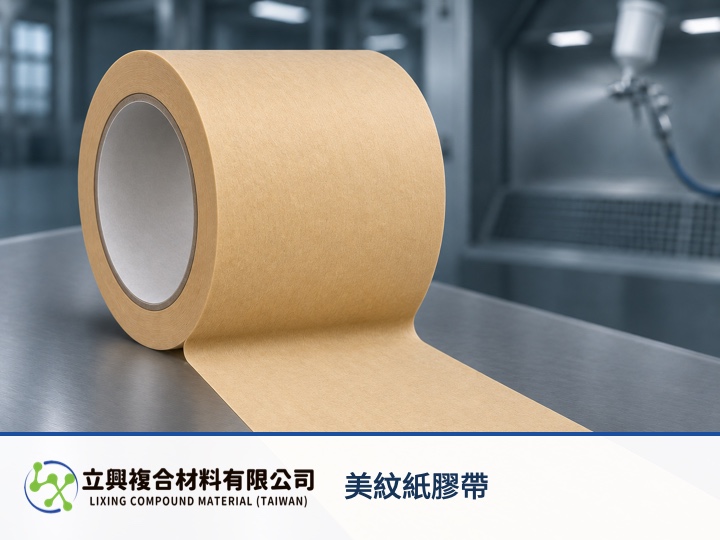
Masking tape protects areas that must stay uncoated during spraying, baking and electronics processing, producing a clear boundary and a cleaner removal step. A practical selection compares the substrate, the stated 100°C for 40 minutes condition, the removal method and the surface condition before the tape enters the coating process.
Crepe paper conforms to curves and helps seal the edge
Lixing masking tape uses a crepe-paper backing coated with a rubber pressure-sensitive adhesive. The backing can follow mild curves and corners, while the adhesive maintains edge contact for paint masking, coating protection and general industrial masking.
A stated 100°C for 40 minutes supports heated masking steps
The product page states a temperature condition of 100°C for 40 minutes. It provides an initial screen for baking or heated operations. Engineers should still compare the substrate, heating and cooling profile, coating chemistry and dwell time because one condition cannot represent every paint line.
Clean removal reduces post-coating surface work
The official product information describes removal without residue or edge lifting and states a holding power of at least 24 hours. This supports workflows in which the tape is applied before coating and removed as one strip afterward. Powder, oil and low-surface-energy finishes still require a trial on the actual substrate.
Tensile and peel values give application and removal context
The product page lists a thickness of 155 ± 10 μm, 180-degree peel strength above 8 N/25mm and tensile strength above 75 N/25mm. Tensile strength helps the paper backing remain intact during long application and full-strip removal. Peel data must be interpreted with the actual substrate and removal rate. For edge application details, read masking tape edge control.
Engineering context: normalize peel force by width
The NIST pressure-sensitive adhesive study uses P = F_avg / w for average peel force per unit width. P is expressed in N/m or N/cm, F_avg is average force over the steady peel region, and w is specimen width. The comparison requires documented peel angle, rate, temperature, dwell time and substrate. Backing stiffness and adhesive rheology affect the result, so P cannot directly predict residue or coating damage. See the NIST peel study.
Send the coating conditions with a sample request
Provide the substrate, surface treatment, maximum temperature and duration, coating type, tape width and intended removal point. Lixing does not offer online checkout. Use the official product page to request a sample and review the conditions for the actual process.
#MaskingTape #CoatingProtection #IndustrialTape #PaintMasking #ProcessMaterials