
Polyimide Gold Finger Tape for Stable Web Tension and Rewinding
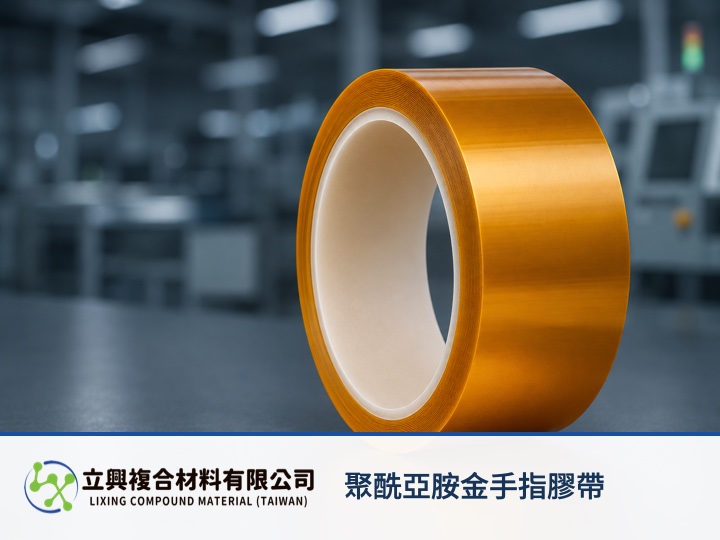
Polyimide gold finger tape can keep masking webs stable in PCB manufacturing and high-end electronic packaging when tensile strength, width, total thickness, and actual line tension are evaluated together. The product page for YD-08-YL Polyimide Gold Finger Tape lists tensile strength of at least 40 MPa, providing a documented starting point for continuous application, unwinding, rewinding, and high-temperature masking trials.
Reduce unexpected web breaks during continuous handling
Tensile capacity gives the tape more working margin as it travels over rollers, across the application point, and into a rewind. The product page lists tensile strength ≥ 40 MPa and elongation at break ≥ 50%. These values can guide an initial trial and edge-damage inspection, but they do not specify an allowable machine tension.
Keep masking boundaries precise on PCB surfaces
The amber polyimide tape has a listed total thickness of 0.065 mm, making it suitable for masking gold fingers and selected process areas. Its documented uses include plating, painting, and baked-coating masking. This is process masking, not electromagnetic shielding.
Retain a manageable tape form through heated processes
The product page lists heat resistance at 260°C and describes residue-free removal after high-temperature processing. Engineers should still run trials with the actual board surface, dwell time, cleanliness, and removal sequence because catalogue conditions do not guarantee every production setup.
Engineering stress connects the material value to web tension
Engineering stress is expressed as σ = F / A₀. Here, σ is engineering stress in Pa or MPa, F is axial tensile force in N, and A₀ is the original cross-sectional area in m² or mm². NIST Technical Note 1714 defines engineering stress as force divided by original area. For a tape web, A₀ depends on width and original thickness, so a narrower slit width experiences greater nominal stress under the same force.
The model applies to uniaxial tension when the original cross section is known. It omits adhesive peel, edge notches, roller friction, temperature, loading rate, and cross-sectional change at large strain. It cannot predict tape life. A useful trial record includes slit width, roll diameter, line speed, tension setting, and break location.
Specify tensile and masking conditions in one sample request
Process engineers and industrial buyers can provide tape width, die-cut shape, equipment tension range, peak process temperature, dwell time, and substrate. Lixing Composite Materials Co., Ltd. can use those inputs to review the Polyimide Gold Finger Tape specification and arrange samples for PCB manufacturing or electronic-packaging line trials.