
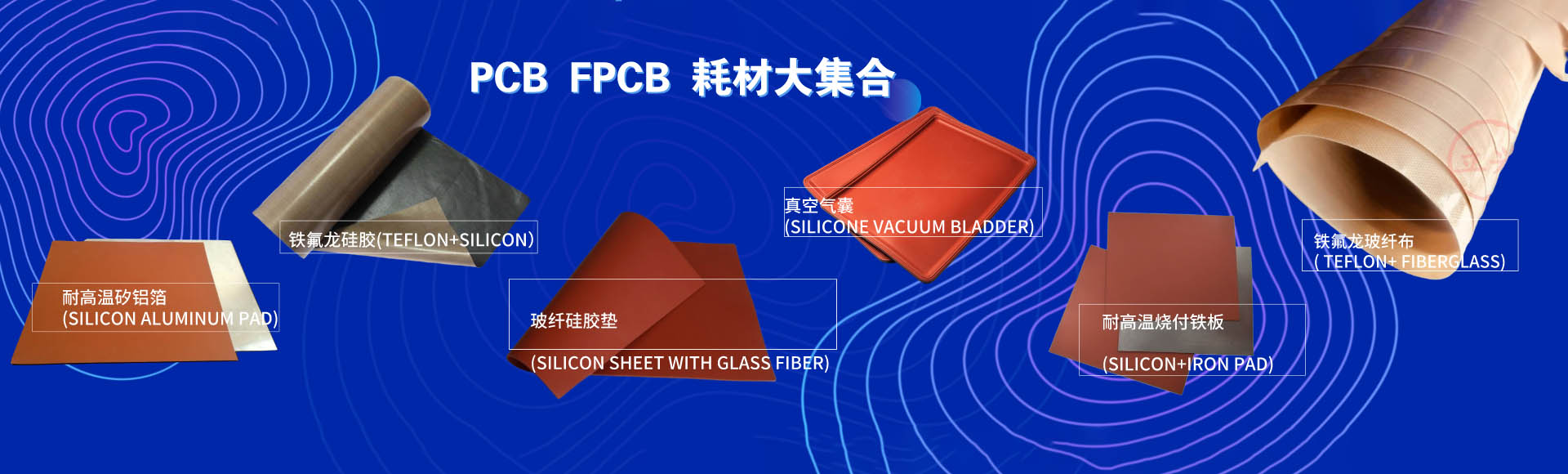
Select FPC Green Silicone Pad Thickness and Hardness by Gap and Press Load
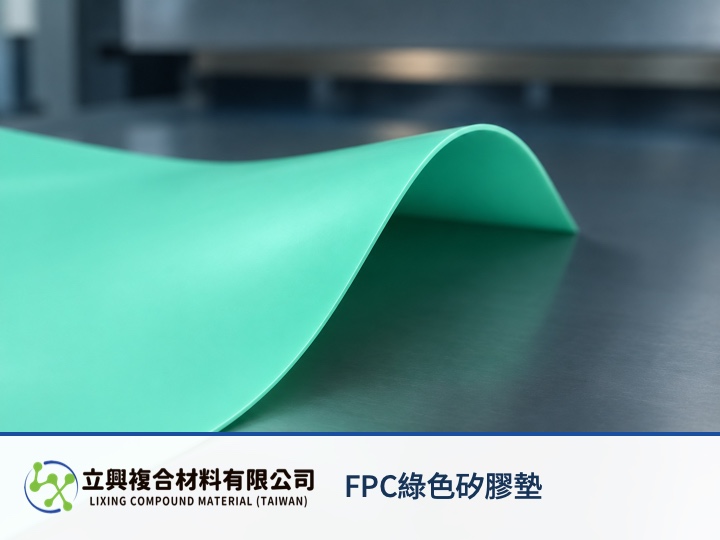
For FPC lamination, put the actual gap, initial pad thickness, press load, and working temperature on one sampling sheet before choosing a cushion pad. The FPC Green Cushing Pad combines silicone and fiberglass and is listed at 50 HA ± 5 HA. It is intended for electronics manufacturing and FPC lamination stations that need cushioning and more uniform heat transfer, while thickness and hardness can be adjusted to the process.
Match thickness to the measured press gap
Thickness determines how much geometric change is available after the press closes. Record the gap between the hot plate and stack, the uncompressed pad thickness, and the thickness under the defined load. Then compare surface marks, plate flatness, and finished-part tolerance. The product page does not assign one pressure to every thickness, so a single thickness should not be presented as a universal answer.
Read 50 HA ± 5 HA together with load conditions
The official specification lists hardness at 50 HA ± 5 HA. Hardness is a useful incoming and sampling condition, but it cannot by itself predict compressed thickness, recovery, or service life. Keep the stack and temperature fixed, record the initial and closed thickness under the same press settings, and use those observations to define the required dimensions and hardness tolerance.
Use engineering strain to document thickness change
Engineering compressive strain can be written as ε = Δt / t0, where ε is dimensionless strain, Δt is the change in thickness, and t0 is the initial uncompressed thickness. A university mechanics reference defines engineering strain using the original dimension. This model helps compare geometry across starting thicknesses, but it does not predict this product's hardness, recovery, service life, or lamination quality. Large-strain viscoelastic behavior requires separate testing.
Lock temperature and construction with thickness
The official page lists a 200°C temperature resistance and a recommended working range of 175–195°C. It also states about 2,000–3,000 reuse cycles under normal operating conditions, with life varying by conditions. Sampling records should retain temperature, pressure, dwell time, stack construction, pad thickness, and cycle count. The fiberglass thickness is specified as 0.2 ± 0.02 mm; construction should still be confirmed against official data and the supplied sample.
Give purchasing and engineering the same sample inputs
Provide effective press area, measured gap, working temperature, pressure or load, target finished tolerance, required length and width, and the requested delivery form. The product page lists adhesive backing, roll form, and precision die-cut delivery. Compare candidates under the same stack and machine settings.
Conclusion: turn thickness change into a traceable sample condition
Electronics and FPC lamination teams can use the pad's cushioning and heat-spreading characteristics more consistently by locking the gap, initial thickness, hardness tolerance, load, and recommended 175–195°C range. Contact Lixing Composite Materials Co., Ltd. for samples and specification guidance on custom thickness, hardness, or delivery form.