
Choose 30–80 Shore A Transparent Silicone Tube by Bend, Clamp, and Flow Conditions
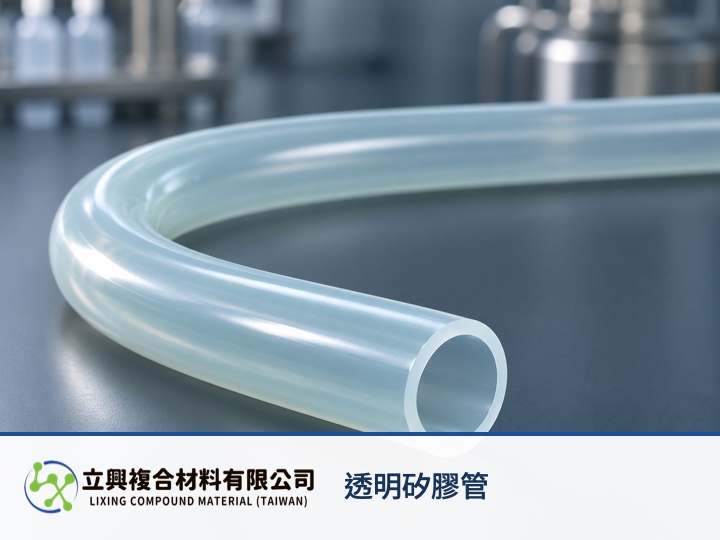
For food equipment, pharmaceutical processing, and laboratory fluid transfer, select transparent silicone tube hardness together with bore, wall thickness, bend path, and applied load. Lixing Transparent Silicone Tube is offered across 30–80 Shore A, with platinum-cured extrusion, a round tube opening, and controlled wall uniformity. Begin with the bend, clamp, temperature, and media conditions, then choose a small sample set.
Start with the motion and restraint
A line routed through confined equipment may benefit from a softer candidate, but the actual inner diameter, outer diameter, wall, and bend radius must confirm whether the lumen remains open. The official page describes the tube as soft, elastic, and kink resistant, making those visible conditions useful for samples intended for food equipment or laboratory transfer lines.
A line held by a clamp, roller, or fixed guide needs a different comparison. Include medium and higher-hardness samples when profile retention matters. For peristaltic service, provide pump-head geometry, speed, compression, and cycle conditions; a static Shore A value cannot establish fatigue life.
Keep geometry constant across hardness samples. The product page lists ±0.1 mm as the regular tolerance and precision capability to ±0.05 mm. If bore or wall changes at the same time as hardness, geometry may dominate the observed bend or clamp response.
Treat 30–80 Shore A as a sampling range
The official specification lists 30–80 Shore A and an operating temperature range of -50°C to 200°C. A hardness number does not create one universal application table because temperature, diameter, wall, and load alter the response. Food and pharmaceutical projects must also verify media compatibility, cleaning conditions, and the required supplier documents.
- Flexible routing: compare softer and mid-range samples at the intended bend space.
- Clamped positioning: compare mid-range and harder samples at identical dimensions.
- Cyclic compression: use hardness as one input and test under the actual equipment cycle.
- Precision assembly: freeze bore, outer diameter, wall, and tolerance before judging feel.
Use the equation to frame deformation, not to promise performance
For a small-deformation, approximately linear-elastic comparison, σ = Eε. Here σ is normal stress in Pa, E is Young's modulus in Pa, and ε is dimensionless strain. At the same stress, a higher modulus produces less strain. ASTM D2240 explains that Shore hardness is an indentation measurement under defined indenter and force conditions; it depends on elastic modulus and viscoelastic behavior, with no simple conversion to a fundamental property. The equation is documented in the NIST materials-properties practice guide.
Silicone is viscoelastic. Large strain, sustained load, repeated compression, temperature, and tube-wall geometry change its response. The equation cannot predict service life, pumping flow, or permanent set; it only clarifies the relationship among stress, stiffness, and initial strain.
Send one complete sampling brief
Specify bore, outer diameter or wall, target hardness range, temperature, media, minimum routing space, clamp or pumping method, length, packaging, and required compliance documents. The official product description also covers transparent natural color, platinum curing, odorless material, and no added plasticizers; verify project-specific requirements against current supplier documentation and samples.
For dimensional acceptance, read the transparent silicone tube tolerance check. For compact routing, use the bend-radius and kink-resistance article. This page adds a distinct decision: how to place the 30–80 Shore A range into a controlled sampling plan.
Conclusion: define the duty before selecting hardness
Food, pharmaceutical, and laboratory fluid lines can use the tube's soft, kink-resistant form and controlled dimensions only when hardness is evaluated with bend, restraint, temperature, and geometry. Review the transparent silicone tube specifications, then request samples with a drawing, tolerance band, and actual duty conditions.