
Nickel-Graphite Gasket: Read Shielding dB by Frequency
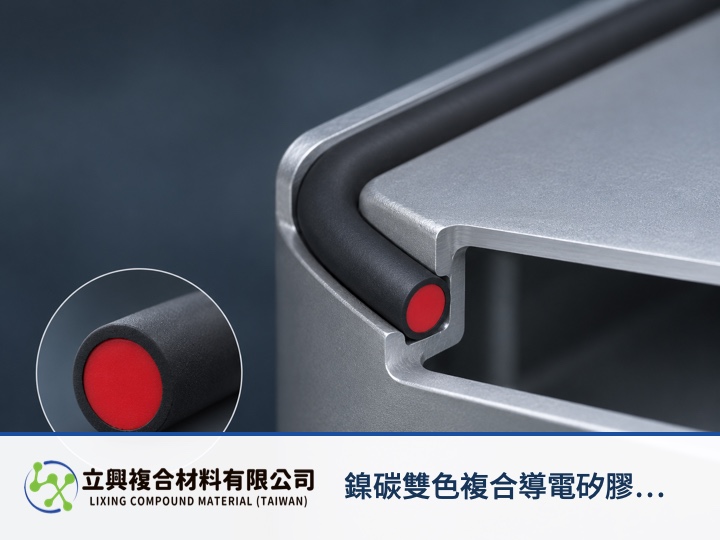
For a datacom enclosure, read a nickel-graphite gasket's shielding dB together with frequency, field type and test setup. The co-extruded product combines a conductive nickel-graphite outer layer with a resilient non-conductive silicone core, supporting electrical contact and environmental sealing at the joint. Start a sample request with the target band, joint geometry and available compression space.
Shielding dB is meaningful under matched conditions
The product page lists ≥50 dB at 200 kHz H-field, 100 dB at 100 MHz E-field, 90 dB at 2 GHz plane wave and 80 dB at 10 GHz plane wave. These results use different frequencies and field conditions, so the largest number alone does not describe enclosure performance. Define the interference band first, then compare evidence with a matching field type and similar geometry. Review the structure and figures on the Co-extruded Conductive Silicone Gasket product page.
The field ratio converts attenuation into decibels
Electric-field shielding effectiveness can be expressed as SE = 20 log10(E_without / E_with). SE is measured in dB. E_without is the electric-field strength without the shield and E_with is the field strength with the shield, both in V/m. This engineering model applies when frequency, field type, antenna positions and geometry remain consistent. The NIST shielding effectiveness technical note provides measurement context. A material-sample result does not guarantee the performance of a finished enclosure joint.
Co-extrusion combines a conductive skin and resilient core
The nickel-graphite outer material supplies the conductive path, while the high-resilience silicone core supplies conformity for sealing. The product page also lists volume resistivity of ≤0.1 Ω·cm, continuous operating temperature from -55 to 160°C and custom profile options. These are useful sampling inputs for datacom enclosures, but volume resistivity and shielding dB are separate measures.
Align three inputs before sampling
- Target interference band and field type, so dB values are not compared across unrelated conditions.
- Groove, joint and compression space, so the custom profile can maintain contact.
- Enclosure material, surface finish and environment, followed by joint-level or enclosure-level verification.
Conclusion
A co-extruded nickel-graphite gasket gives datacom enclosure designers a conductive outer layer and resilient sealing core in one profile. Shielding dB still belongs to a stated frequency and setup. Review the product specifications and profile options, then send Lixing the target band, groove dimensions and environmental conditions when requesting samples.