
PTFE Film Tape or PI Tape: Select for Heat-Sealing Release and Thermal Cycling
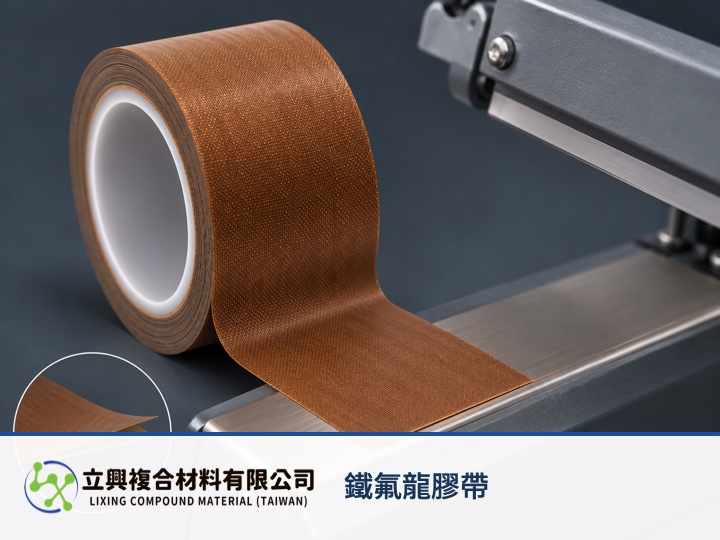
When molten packaging film residue slows cleaning on a heat sealer, PTFE film tape places a non-stick surface at the heated contact area. Lixing lists a maximum temperature of 260°C and packaging sealing as a documented application. Engineers comparing PTFE with PI tape should first identify whether the exposed face contacts molten material, then check the temperature cycle, substrate, and planned removal method.
A non-stick face addresses sealing residue
The smooth PTFE film surface suits the heated sections of sealing and heat-bonding machines where molten film can collect. The application and 260°C product-page condition are documented on the official PTFE Film Tape page. The operating setpoint must still remain within the combined limits of the equipment, adhesive layer, and substrate.
Known thickness supports fixture checks
This tape has a total thickness of 0.15 mm, comprising 0.08 mm PTFE film and a 0.07 mm adhesive layer. The listed peel strength is 850 g / 25 mm. These values help an engineer review fixture clearance and application geometry, but they do not predict removal behavior on an untested substrate. A sample request should include the surface material, cleaning method, and replacement cadence.
Separate PTFE and PI by the contact job
PTFE is the direct candidate when the process problem is molten-film sticking, roller pickup, or composite release because the official page documents a non-stick surface and those applications. If the requirement shifts to thin masking, detailed electrical isolation, or a particular adhesive system, add a verified PI tape datasheet to the comparison. This article does not borrow unverified PI specifications; both choices require the actual grade, adhesive, and substrate to be tested.
Use thermal strain to frame cycling risk
The linear thermal strain model is ε_T = α × ΔT = ΔL / L. Here ε_T is dimensionless thermal strain, α is the coefficient of linear thermal expansion, ΔT is the temperature change, and ΔL and L are the length change and initial length. The relationship is described in a university engineering text on thermal deformation. It is a first estimate for uniform temperature and free expansion; adhesive viscoelasticity, restraint stress, peel, and repeated cycling remain outside the model, so it cannot predict tape life.
Bring four conditions to sample selection
- Continuous and peak temperature at the heated contact, including the heating cycle.
- Substrate material, surface texture, and direct contact with molten material.
- Tape width, thickness, fixture clearance, and wrapping direction.
- Cleaning chemistry, removal method, and available maintenance window.
A packaging line that needs a replaceable heat-resistant release surface can start with brown, black, or white PTFE Film Tape. Share the equipment temperature, substrate, and required dimensions with Lixing to check whether the 0.15 mm construction fits the current sealing area and whether a PI candidate also needs sampling.