
Copper Foil Tape Thermal Conductivity: Reading 400 vs 600-800 W/m·K for In-Plane Heat Spreading
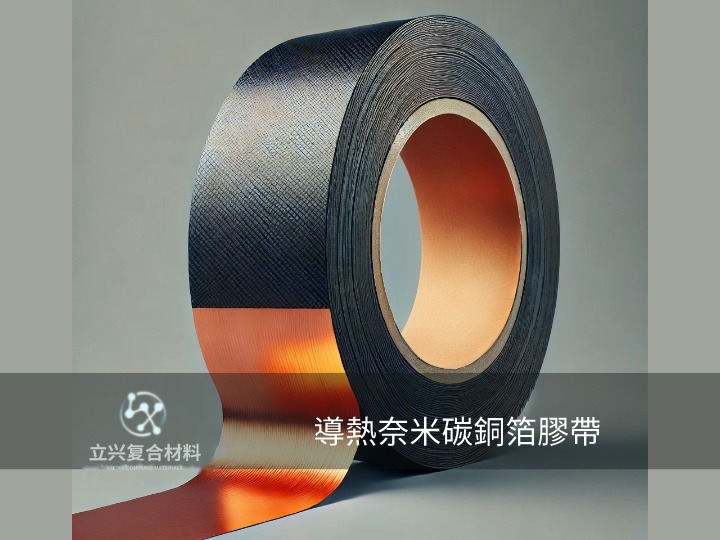
Engineers managing heat in thin smartphones and tablets will find two thermal conductivity figures on the Copper Foil Self-Adhesive Single-Sided Tape datasheet: 400 W/m·K for the base layer and 600 to 800 W/m·K for the composite layer. The first describes the copper substrate, the second the copper after its nano-carbon surface treatment, and neither includes the acrylic adhesive. Read each number against its layer thickness and you can judge whether a hot spot will spread sideways through the tape.
This article focuses on datasheet reading, so buyers sourcing copper foil tape for electronic manufacturing can place the in-plane numbers of the Copper Foil Self-Adhesive Single-Sided Tape where they belong.
600 to 800 W/m·K in the Composite Layer Spreads Hot Spots
A hot spot runs hot because its heat is packed into a small area. The product page lists exceptional thermal management as its lead feature: composite thermal conductivity reaches 600 to 800 W/m·K, ideal for smartphone and tablet heat dissipation. A strip of foil laid between the hot spot and the housing or shield can gives that heat an extra path across the plane toward cooler areas.
Which Layer Each Number Describes
The specification table lists the two values separately: Base Thermal Conductivity 400 W/m·K and Composite Thermal Conductivity 600 to 800 W/m·K. The base is the copper substrate. The composite is the copper after its surface is coated with nano-carbon. The finished tape also carries an acrylic adhesive layer whose conductivity is far below any metal, so both datasheet values describe the metal side only.
The page does not state the test method or whether the values are in-plane or through-thickness. Before comparing figures from different sources on one sheet, confirm which layer each number refers to and how it was measured.
In-Plane Spreading Depends on k Times Thickness
When heat travels along the length of the tape, the layers act like parallel wires that share the heat flow. How much each layer carries depends on its conductivity k multiplied by its thickness t. The product page lists substrate thickness from 0.009 to 0.07 mm and total thickness from 0.03 ± 0.005 to 0.155 mm. At the same k, a thicker substrate carries more in-plane heat, which is the trade-off to weigh when stack height is tight. For how to keep a heat path continuous through an assembly, see building a continuous heat path in thin electronics.
Engineering Formula: Parallel Thermal Resistance
According to the MIT Unified Engineering notes on thermal resistance circuits, a slab has thermal resistance R = L / (kA), and side-by-side heat paths combine in parallel. Treating each tape layer as a parallel slab of width w, length L and thickness t gives the total in-plane resistance:
1/R = 1/R1 + 1/R2 = (w / L) × (k1 × t1 + k2 × t2)
- R: total in-plane thermal resistance along the tape length, K/W
- R1, R2: in-plane resistance of each layer alone, Ri = L / (ki × w × ti), K/W
- w: tape width, m
- L: in-plane conduction distance, m
- k1, k2: thermal conductivity of each layer, W/m·K
- t1, t2: thickness of each layer, m
Applicability: steady-state, one-dimensional in-plane estimates, such as a fixed-width strip carrying heat from a hot spot toward a cooler region, with each layer uniform along its length.
Limitations: this is an engineering model, not a product specification or guaranteed value. It ignores interface contact resistance, convection and radiation, two-dimensional spreading around the hot spot and the temperature dependence of k. The product page does not publish per-layer thickness splits, so use the result to judge direction and confirm temperatures in the finished device.
Stable Through Die Cutting and Lamination
The product page also cites good mechanical strength during die-cutting and lamination, and an acrylic adhesive that bonds to stainless steel, aluminum and other surfaces. That matters for die cut copper foil tape: in-plane conduction only works when the part is cut accurately and laid flat.
- 180° peel strength on stainless steel: ≥ 1.0 to ≥ 1.50 N/25mm
- Initial tack ≥ 2 (ball number); holding power 8 to 12 hours (1 inch)
- Temperature resistance: 120 °C short term, 80 °C long term
- Acrylic adhesive (black or transparent); tape color black or white
- Thermal conduction, EMI shielding and UV resistance in one thin profile
Where It Fits
- Thin-profile thermal management in smartphones and tablets
- Heat dissipation and EMI shielding in precision electronic equipment
- EMI/RFI shielding and grounding of small electromagnetic components
- PCB repair and prototyping
What to Send With a Sample Request
- Hot spot location, available bonding area and where the heat should go
- Allowed total thickness
- Whether long-term operating temperature stays within 80 °C
- Substrate surface; rubber or resin surfaces need a primer
- Whether grounding or EMI shielding is also required
Request a Sample With Your Hot Spot Layout
Composite in-plane conductivity of 600 to 800 W/m·K, combined with substrate thickness options from 0.009 to 0.07 mm, suits smartphones, tablets and precision electronics that need to flatten hot spots within a tight stack. Send the hot spot location, allowable thickness and operating temperature to yw@zh-lx.com, or review the full specifications on the Copper Foil Self-Adhesive Single-Sided Tape product page. Lixing can discuss sample specifications for thickness and color.
#CopperFoilTape #ThermalManagement #ElectronicsCooling #EMIShielding