
Choosing ACF Bonding Buffer Thickness: 0.26 mm Green Silicone Sheet for Heat and Contact
On a flat-panel ACF bonding line, the press head may reach its set temperature while the glass-to-FPC edge still shows uneven loading or a shifted heating response. A thermal silicone sheet starting at 0.26 mm adds a thin compliant buffer while retaining a conduction path. Engineers still need to review pressure, temperature, thickness and the ACF cure window together instead of selecting from one material value.
A thin buffer accommodates small surface offsets
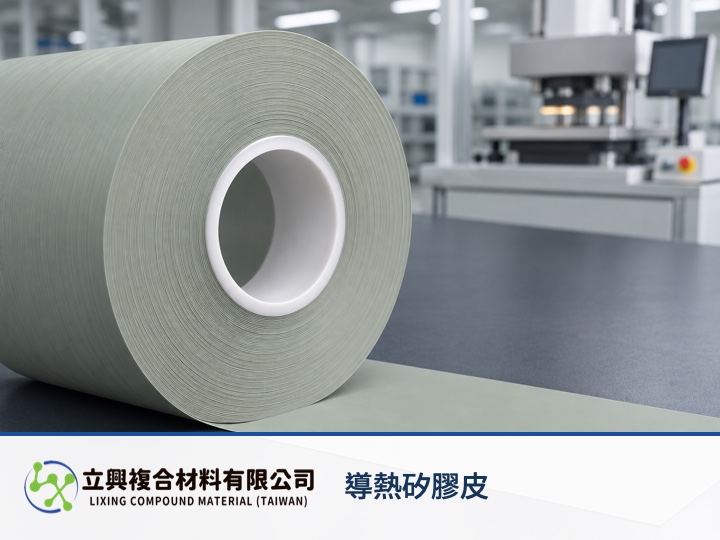
Small height differences across the glass, FPC and fixture can concentrate load at a few contact points under a rigid head. The Thin Green Silicone Sheet is described as resilient and cushioning, with a flat, powder-free and non-stick surface. Those verified characteristics suit LCM hot-press bonding where a thin buffer and a clean contact surface are both relevant.
A 0.26 mm starting thickness gives sampling a clear baseline
The sheet must accommodate assembly variation without extending the heat path more than the process needs. The product page lists a standard thickness of 0.26 mm and supports custom colour, specification and dimensions. This is a sampling baseline, not a universal setting for every ACF machine. Head flatness, total workpiece stack, permitted compression and post-bond appearance remain part of the decision.
1.0 to 1.5 W/m·K supports heat flow through the buffer
The grey-green sheet is listed at 1.0 to 1.5 W/m·K, with ASTM D5470 shown as the test method. It can conduct heat through the buffer toward the bond area. Actual heating rate also depends on contact resistance, bonded area, pressure and the equipment control profile, so this material value is not converted into a promised line cycle.
Reading thickness through conduction resistance
The slab conduction resistance in the MIT heat-transfer equation sheet is Rcond = L / (kA). Rcond is thermal resistance in K/W, L is thickness along heat flow in m, k is thermal conductivity in W/(m·K), and A is area normal to heat flow in m². For the same material and area under ideal conditions, increasing thickness raises the material resistance. This engineering model is for preliminary one-dimensional steady slab comparison. It omits interface contact resistance, transient heating, pressure distribution, sheet compression and the ACF cure reaction.
Temperature and insulation values set material boundaries
The product page lists an operating range of -40°C to 200°C, a momentary upper temperature of 340°C, and withstand voltage of at least 4 kV. These values can screen material fit around equipment temperature and electrical isolation. A momentary rating is not a continuous operating rating, and withstand voltage does not replace system insulation design or validation at the chosen thickness.
Sample with thickness, pressure and cure window together
For precision electronics that require ACF bonding, prepare the head dimensions, total workpiece thickness, pressure, temperature profile, hold time and allowed compression before requesting a sample. The official product page provides the verified sheet specifications and customisation scope. Its thermal conduction and resilient cushioning are relevant to thin buffers used in flat-panel ACF hot-press bonding.
#ThermalSiliconeSheet #ACFBonding #HotPress #ThermalManagement #FlatPanelDisplay